
Typical Body Language of the Breed: Facial Cues
French Bulldogs pack a lot of talk into a small face. The wrinkle folds, the round eyes, the set of the mouth — they all give you clues. Watch them in quiet moments and during play; you’ll start noticing patterns. Typical Body Language of the Breed shows up most clearly on the face, so the next time your dog looks at you, study that expression like it’s a book you want to read.
These dogs use subtle shifts in their face to tell you how they feel. A relaxed forehead and soft eyes usually mean calm. Tight or pulled-back lips and a furrowed brow can signal stress or discomfort. Because Frenchies have flat faces, their signals can be quick and compact — almost like a blink and you’ll miss it.
Learning these cues gives you an edge as an owner. Practice by checking your dog in different situations: vet visits, walks, guests, and naps. Jot down what you see and how the dog reacts. Over time you’ll read their moods faster and build trust.
Eyes and steady gaze
Eyes do heavy lifting in a Frenchie’s face. Soft, blinking eyes mean your dog is relaxed. A hard, fixed stare can mean focus, curiosity, or a warning. Context is your best tool: are they wagging, frozen, or backing away? That tells you which meaning fits.
Because their eyes sit wide, you’ll see whale eye — white showing at the side — when they’re uneasy. If your Frenchie stares but the body is loose, it’s likely attention. If the body is stiff or the lips tighten, give space and check for triggers like strangers or other dogs.
Mouth shape and panting
The mouth is a quick mood meter. A loose, slightly open mouth with the tongue out usually means play or rest. Lip licking, yawning, or a tight mouth often signal stress or discomfort. Watch for combinations — mouth tight plus pinned ears is a red flag.
Panting is tricky with flat-faced breeds. Frenchies pant to cool off and to cope with stress. Short, rapid panting, noisy breathing, or blue-tinged gums mean you should act fast: offer water, move to shade, and see a vet if breathing stays labored.
Facial expressions across breeds
Different breeds wear feelings differently: a Greyhound’s long face shows tension slowly, a Husky uses eyebrow action, and Pugs flash similar wrinkles but with other signals mixed in. You can’t copy signals from every breed; pay attention to your own Frenchie’s habits and compare them to general cues to stay accurate.
Your Frenchie’s Ear Positions
Your Frenchie’s ears are loud without making a sound. Those bat-like ears move like tiny weather vanes. When you learn what each tilt means, you read your dog’s mood fast and act right.
Watch the whole picture. Ears alone tell part of the story. Pair them with eyes, tail, and posture for a clear read of the Typical Body Language of the Breed and what your dog feels right now.
Think of ears as mood flags. High and forward usually says “game on.” Pinned back can mean worry or submission. Flat against the head often means fear or pain. You’ll learn to spot the difference in minutes with a few real-life moments.
Forward, back, or flat
When your Frenchie’s ears go forward, they’re curious or excited. You’ll notice this at the door when a friend arrives or during play. It often comes with a wag and quick steps.
Ears pinned back or flat tell a softer story. Pinned back can be polite submission or worry. Flat against the skull leans toward fear or pain. If your dog hides, tucks the tail, or freezes, treat pinned or flat ears as a sign to back off and offer calm support.
Ear position communication differences
Situations change the meaning. A forward ear during play equals joy; the same ear at the vet might mean stress and alertness. Individual differences matter too — some Frenchies have naturally softer ear carriage or past ear injuries. Puppies move ears unevenly as they grow. Pay attention over days, not just one moment.
Ear signals compared by breed
Compared to floppy-eared breeds like Labs, your Frenchie’s upright ears give clearer, faster signals; they act like little radar dishes. Herding breeds may use ears with intense focus, while sighthounds hold a quieter ear posture. Knowing these differences helps you read your Frenchie against other dogs.
Tail and Rear Signals
Your Frenchie’s tail and rear give quick clues about mood and intent. Because French Bulldogs have a short, often screw-shaped tail, you learn to read the rest of the rear: hip tension, rump height, and the tiny wag. Watch these along with ear and eye signals to get a clear read on Typical Body Language of the Breed.
A low, loose rear with a small wiggle usually means your dog is relaxed and happy. If the rump is stiff and the tail is held tight or tucked, your pup is uneasy or scared. Tail cues are fast and subtle — you will miss them if you only glance.
Tail height and movement
Tail height in many breeds is obvious, but with Frenchies you must read movement more than height. A tail held higher than normal can mean alert interest. A quick, loose wiggle usually means joy. Slow, tight wagging often signals caution or uncertainty.
Movement speed matters. Fast, full-body wags usually mean welcome and excitement. A rigid, slow wag with the body tense can mean annoyance or a warning. Pair tail cues with posture and vocal tone for a true picture.
Tail position meanings by breed
Different breeds carry tails differently, so context matters. Huskies carry a curled, high tail that often signals excitement. Shepherds keep a long tail that can go high when alert. Your Frenchie’s low tail sits close to the body, so its tiny shifts mean more than big sweeps.
Tail cues to watch by breed
Watch for these quick cues: French Bulldog — short, low tail that wiggles with whole-body smiles or tucks when nervous; German Shepherd — high, stiff tail for alertness; Husky — high curl wagging broadly when happy; Beagle — tail up and flagging when on a scent; Greyhound — straight tail tucked when fearful.
Posture and Whole-Body Stance
Your Frenchie talks with its whole body. The Typical Body Language of the Breed shows up in a squat, broad chest, and bat ears that act like little antennae. Watch the silhouette: a low center of gravity and short tail change how signals look. What might read as calm on a Labrador can look different on your Frenchie.
Read the overall shape, not just one part. Is the back straight or loose? Are the feet planted or ready to spring? Weight shifted forward usually means interest or readiness; weight back can mean worry. Ears, head tilt, spine curve and tail position all add pieces to the story.
Don’t assume a single gesture tells the whole tale. Because of the flat face and compact body, your Frenchie may hide discomfort in ways bigger breeds don’t. Lip licking, sudden stillness, or a quick yawn can be the tiny flags that mean I’m uneasy. Learn those small signals and you’ll save both of you stress.
Relaxed vs tense posture
Relaxed looks loose. Your Frenchie’s body will wobble a bit when it moves, with a soft mouth and blinked eyes. The tail will wag in a slow, gentle arc or lie low. A play bow—front legs down, rear up—is an invite you can trust.
Tense shows up as a statue. The body stiffens, the head may be held high and the gaze fixed. Mouth closes, breathing can speed, and legs lock. In small breeds like Frenchies, tension can be subtle—watch for a low tail or a frozen step more than dramatic posturing.
Canine posture signals by breed
Different breeds use the same language but with different accents. A Greyhound’s lean lines and a Husky’s tail plume send messages that read one way; your Frenchie’s compact frame and upright ears change how those messages look. Learn your dog’s baseline — don’t copy cues from giant breeds you see online.
Body stance clues for owners
Lean-in equals trust; if your Frenchie plants its body against you, it’s saying I like this. Weight back or a tucked tail means give space. A hard stare or locked legs means pause and step away. Use these simple clues to decide whether to pet, play, or back off.
Play and Greeting Behaviors
Frenchies greet like they’re lighting up the room. When your French Bulldog spots you, you might get a snort, a wiggle, and a full-body flop. Those moves say, I’m happy, I’m excited, come closer. Relaxed ears and a soft gaze mean friendly interest, while a hard stare or pinned ears can mean your dog needs space.
Play and greeting behavior mixes clear signs and silly quirks. Your dog may hop sideways, spin, or bring a toy — simple requests: Play with me! or Notice me! Learning these signs helps you answer in a way your dog understands.
Look at the whole picture to read Typical Body Language of the Breed. A wag that’s low and loose differs from a stiff, high tail. Add vocal cues — grunts, snorts, small barks — and you’ll know whether your Frenchie wants belly rubs, chase, or a quiet pat.
Play bows and bouncy moves
The play bow is a classic: front legs down, rear end up, eyes bright. Your Frenchie uses this to invite you or another dog to play. It’s usually paired with a wag and a soft bark. When you see it, match the energy — drop down, clap, or toss a toy.
Frenchies also have a compact bounce. They launch short, zippy sprints, skid to a stop, then flop dramatically. That burst is play, not aggression. Keep games short and low-impact to suit their build and breathing.
Play and greeting behaviors by breed
Every breed writes its own playbook. Labs might fetch nonstop; herding dogs will nip and circle. Your Frenchie favors close contact, goofy rolls, and toy-sharing. In mixed company, recognize different play styles to keep greetings safe and fun.
How your dog asks to play
Your Frenchie will ask clearly: paw at your hand, drop a toy, or do a dramatic flop with a pleading look. They may make tiny barks, snort, or dance in a short circling pattern. Respond quickly with a short game or a gentle pat so their invitation doesn’t turn into frustration.
Stress Indicators Specific to Frenchies
Frenchies talk with their bodies more than with barks. You’ll see quick tells if you pay attention: tense shoulders, a tucked belly, eyes that avoid yours. These are part of the Typical Body Language of the Breed and they show up before a meltdown.
Because French Bulldogs are short-nosed, signs can hide in breathing and face movements. A sudden spike in heavy breathing or snorting can mean stress, not just play. Read the whole picture: ears, tail, eyes, and mouth. One sign alone won’t always tell the story.
You know your dog better than anyone. Compare new behavior to normal habits. If your Frenchie freezes when visitors arrive or yawns during a walk, that’s a change worth noting.
Panting, yawning, lip licking
Panting is normal after play or on hot days. But panting in cool weather, with a stiff body or wide eyes, is likely stress. Timing gives clues — are new sounds, people, or places causing it?
Yawning and lip licking are classic calming signals. If your Frenchie yawns while someone reaches to pet them, step back. These tiny gestures often stop larger problems if you respond fast.
Stress indicators breed specific
Frenchies show stress tied to their build. Their short snout can make breathing sounds louder, so extra effort to breathe may be a stress sign. Eye whites showing or a sudden change in snort pattern can be red flags. Wrinkles and facial folds can tense up when upset. Tail movements are subtle — tiny, quick wags sometimes mean nervous energy, not happiness.
Spotting stress before it builds
Watch flicked ears, a quick glance away, a slight paw lift, or a change in sniffing rhythm. Move your dog away from the trigger, offer a calm place, and use a quiet voice. Acting early keeps a small worry from turning into fear.
Aggression Warning Signs by Breed
Different breeds show anger in different ways. A French Bulldog often hides stress behind a wrinkled face and a stubborn stare, while other dogs might bark or bolt. Learn the Typical Body Language of the Breed so you catch trouble early and don’t misread a snort for play.
Think about why dogs get aggressive: fear, pain, guarding food or toys, or poor social habits. Your Frenchie may freeze or give a low rumble before acting. Context tells you which reason fits. Watch patterns, not single moments — repeated signs at mealtime or when guests arrive are cues to act.
Growls, snaps, stiff body
Growls are loud and clear warnings. If your Frenchie growls, don’t laugh it off. A growl with a fixed stare and raised hackles says back off. Let the dog have space and check for pain or fear.
A snap or quick bite without contact is a red line. A stiff body, closed mouth, and frozen legs mean the dog is ready to act. Move slowly, lower your voice, and remove the trigger. Training and vet checks help when this repeats.
Aggression warning signs by breed
Small breeds might use noise — sharp yaps or aggressive lunges — to cover fear. Your Frenchie often shows subtler signs: tightened lips, yawning at odd times, or stiffening mid-play. Don’t judge size; a small dog can still cause harm or be deeply upset.
When to step in safely
Step in when the threat is immediate — teeth showing, a real bite, or a child in danger. Use a calm voice, create distance with a barrier or leash, and avoid grabbing the dog’s head. Call a pro trainer or vet if the behavior is new or worsening.
Submission and Dominance Postures
French Bulldogs wear their feelings on their shoulders and faces. You’ll notice clear signals when your Frenchie is saying I’m cool with this or Back off. A low body, tucked tail, soft eyes, and a belly offered up are classic submission signs. These are part of the Typical Body Language of the Breed and help you read your dog like a picture book.
Dominance in Frenchies is often quieter: standing tall, stiff legs, direct stare, and a closed mouth. A dog might lean into you or another dog to assert a claim. Context matters — a quick belly roll during play is friendly; the same belly in a tense situation is appeasement.
Belly-up and lowered head
When your Frenchie goes belly-up, it’s usually an olive branch. Showing the belly exposes vulnerability — that’s trust or a way to stop trouble. If a dog lowers its head at the same time, it doubles down on the apology.
But pay attention to timing. A belly-up during rough play is an invitation. A belly-up after a growl can be a peace offering. If the lowered head comes with a rigid body or frozen eyes, step in calmly and watch how things settle.
Submission and dominance postures breed variations
Not every Frenchie will show the same moves. Some are dramatic belly-showers, others are subtle nodders. Size, upbringing, and personality change the choreography. Bulldogs are bred for compact, expressive faces and short bodies; that makes their signals look small but loud. Learn your dog’s baseline so tiny changes shout messages you can act on.
Reading rank and comfort
Rank and comfort are written in small cues: relaxed joints, a wag that starts at the hip, a loose mouth, or leaning into you for support. If your Frenchie blocks access to a toy, they’re asserting control. If they retreat, lick lips, or keep ears low, they want peace.
Calming Signals and Appeasement
Calming signals are your Frenchie’s soft talk. These small moves tell others, Hey, I’m okay or Let’s cool this down. Watch for them when visitors come in, at the dog park, or during vet visits. They are part of the Typical Body Language of the Breed and help you read what your dog feels without words.
Your French bulldog may use these signals more than bigger breeds. A slow blink or a sideways walk can be their way of saying they don’t want trouble. When you spot these signs, you’re seeing your dog manage stress and keep peace.
Learning to spot calming signals will change how you act around your dog. You’ll catch small warnings before things get loud or scary, giving you a chance to step in calmly and help.
Turning away and paw lift
When your Frenchie turns their head or body away, they’re giving space without drama. Turning away can stop a quick build-up of tension. A raised paw often means uncertainty; combined with soft eyes and a lowered body, it asks for time. Don’t force contact — let them come back on their terms.
Calming signals and appeasement behaviors
Yawning, lip licking, and soft blinking smooth social interactions. Sniffing the ground or slow walking shifts focus and lowers stress. When you notice these, respond with calm tones and simple actions to help your dog feel safe again.
How your dog tries to calm things
Your dog will use a mix of tiny acts — scooting away, freezing, soft eye contact — to keep peace. Match that calm: step back, lower your voice, offer a quiet treat or gentle praise. Reward the calm moments.
Reading Typical Body Language of the Breed in Practice
To read Typical Body Language of the Breed well, watch patterns over days not minutes. Combine facial cues, ears, tail, posture, and breathing to form a full picture. Remember that breed traits (flat face, compact body, upright ears) make many signals quick and subtle. Trust your observations, act early when you see stress, and celebrate the clear, joyful signs — the wiggles, play bows, and soft blinks that mean your Frenchie is happy and secure.
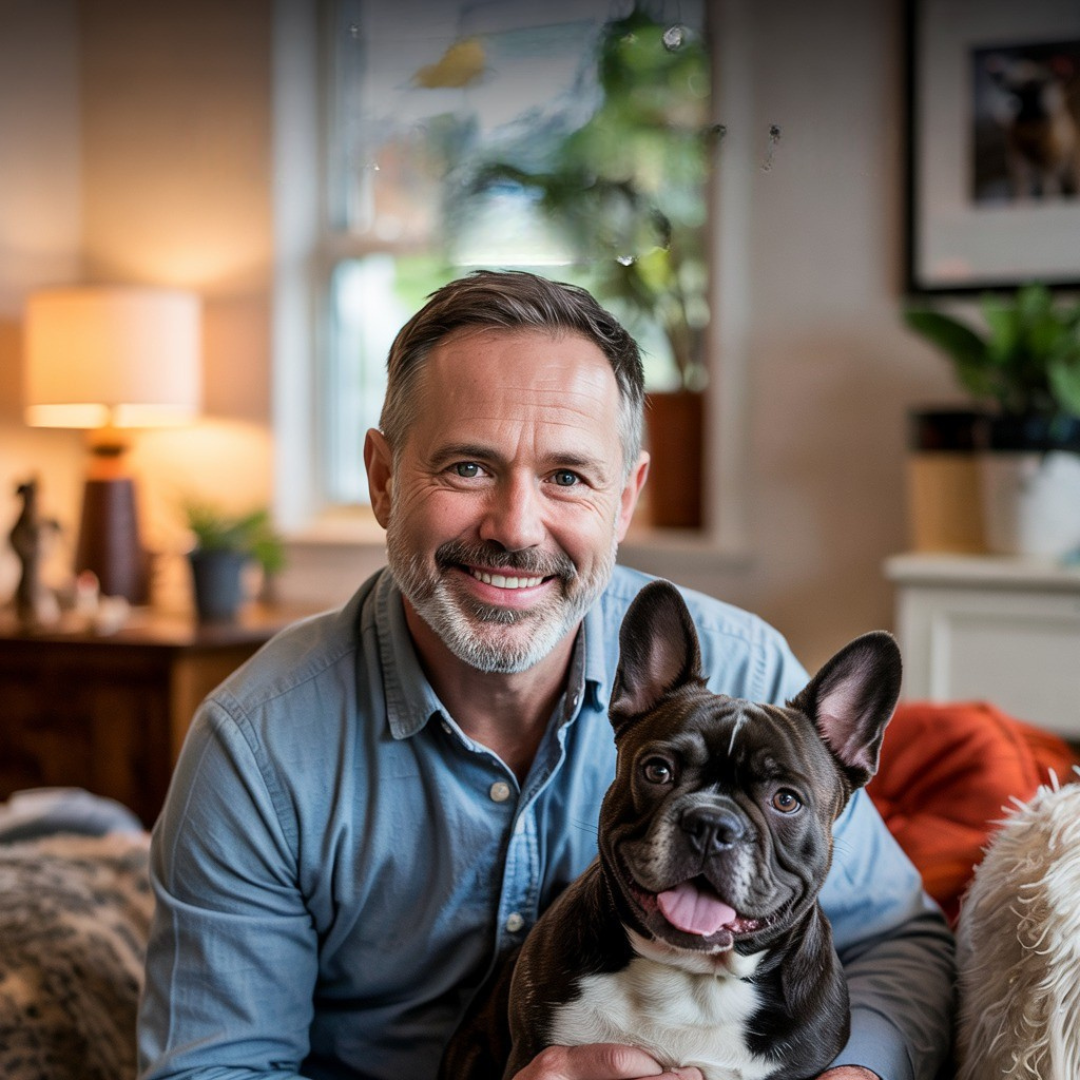
Dr. Alexandre Matheusu is a French Bulldog specialist with over 20 years of hands-on experience dedicated exclusively to the breed. Throughout his career, he has worked closely with responsible breeders, veterinarians, and kennel clubs, always respecting the traditional standards that shaped the French Bulldog into the companion dog it is today.
He holds a degree in Veterinary Medicine and a postgraduate certification in Canine Genetics and Breeding Management. Over the years, Dr. Moreau has focused on preserving breed health, correct morphology, and balanced temperament, following classical breeding principles passed down by experienced breeders.
Recognized for his deep knowledge and practical approach, he has advised kennels across Europe and the Americas, participated as a consultant in breeding programs, and contributed to educational materials aimed at protecting the future of the French Bulldog.
Humanize 274 words