
The temperament of the French Bulldog with young children
French Bulldogs are gentle, affectionate, and often act like a kid-friendly couchmate. They love to be near family and will follow your child around the room like a tiny guardian. Because they crave closeness, they form strong bonds quickly and respond well to calm, consistent attention from kids who know how to be gentle. The temperament of the French Bulldog with young children is usually affectionate and steady, but knowing their limits is key.
At the same time, Frenchies have a streak of stubbornness that can show when they’re tired or not in the mood to play. If a child is too rough or noisy, your French Bulldog may retreat or give warning signs like lip licking, turning their head, or moving away. Teaching children to read those signs keeps both safe and happy.
French Bulldogs are good with routine. They like regular meals, short walks, and lots of naps. Their low energy and love of cuddles make them a natural fit for families that want a calm companion rather than a high-drive playmate. With basic training and gentle rules, they can be wonderfully reliable around young children.
Affectionate and loyal family dog
You’ll see loyalty in how a Frenchie perks up at little footsteps and follows a child’s voice. They offer a steady, warm presence—think of them as a living stuffed animal that breathes and snores. That calm devotion often makes them a child’s best nap buddy and a reliable play partner for quiet games and story time.
Still, loyalty doesn’t replace boundaries. Teach both your dog and your child what respectful interaction looks like. Praise calm behavior and give the dog space during meals or naps. That mix of love and rules keeps loyalty healthy.
Calm play style and low energy (French Bulldog playfulness with young children)
French Bulldogs enjoy short, playful bursts—chase a toy for five minutes, then it’s back to the sofa for a nap. This suits young kids who enjoy brief activities followed by quiet time. Their playfulness is gentle, not rough, which usually fits well with little hands and soft voices.
Because they have a brachycephalic face, Frenchies can overheat or tire faster than other breeds. Plan for short sessions, plenty of water, and cool breaks. When children learn to pace play and watch the dog’s comfort, both will enjoy safer, happier time together.
Quick overview of child-friendly traits
French Bulldogs are patient, people-focused, and enjoy cuddles and calm interaction. Their small size and low energy reduce the chance of accidental knock-downs, but they still need supervision with very young children and clear boundaries so play stays safe and fun.
How Frenchie behavior around toddlers looks
Frenchies often act like a small, sturdy friend at your child’s side—playful one moment and calm the next. The temperament of the French Bulldog with young children tends to be affectionate and steady, but also a bit stubborn. Watch for quiet nudges, grunts, and happy wiggles as signs they want to join in.
Pay attention to their body language: a relaxed body, soft eyes, and a wagging tail mean the dog is enjoying the moment. If they flatten their ears, freeze, or give a tight lip, they need a break. Routines—predictable naps, playtimes, and gentle rules—help them stay balanced.
Patient moments and limits (French Bulldog patience with kids)
Frenchies can be very patient with small kids and often tolerate noisy toys and unsteady hugs longer than some breeds. You might find your dog lying beside a toddler like a calm anchor.
But every dog has a threshold. Pushing past limits can lead to snarling or snapping. Teach children to respect boundaries and give the dog a quiet space. Training both dog and child reduces risk and builds respect.
Signs of stress to watch for (French Bulldog safety with children)
Stress shows in small signals: lip licking, yawning, whale eye (showing the whites), stiff posture, or sudden hiding. These are the dog’s words for I’m uneasy. If you catch them early you can defuse the moment before it gets worse.
Act fast when stress shows: move the child gently away, offer a calm chew toy or a short break, and use a soft voice. Teach toddlers to step back at the first sign. That habit keeps everyone safe and trust strong.
Read toddler‑dog cues early
Watch both sets of cues: when your toddler gets too rough or excited, and when your Frenchie turns away or tucks its tail. Catching signals early lets you pause the interaction before escalation. A quick redirection or a snack can reset the scene.
Supervision and safety tips for families
You want your Frenchie and your kids to be pals. Watch every interaction at first. The temperament of the French Bulldog with young children can be friendly, but these dogs are small and can get overwhelmed quickly. Teach kids to use soft hands, to stop if the dog moves away, and to respect the dog’s quiet spot. A calm start builds trust.
Keep playtimes short and predictable. Put away food, chews, and prized toys when kids are near. Show your child how to stroke the chest and shoulders, not the face or tail. Use quiet praise and small treats so the dog learns good manners without getting overexcited. Practice for five minutes a day—small steps matter.
Make the home safe for a brachycephalic breed: give the dog a quiet spot with water and a cool surface, and block off stairs and high furniture until trust is established.
Rules for safe play (French Bulldog supervision and training for kids)
Set clear, simple rules kids can follow: No face touching, Hands are soft, and Stop on the word ‘Enough.’ Teach the dog the same cues through short, fun training games so both child and dog learn together. Praise good behavior immediately.
Show kids how to read dog body language and make practice part of playtime: five minutes of petting, then a break. Keep commands easy and consistent so everyone understands.
When to step in and separate
Step in when the dog growls, freezes, or snaps—clear signals of stress. Remove the child calmly and create distance. Don’t shout or pull abruptly; a calm move prevents panic.
If a bite happens, stay calm, check the injury, wash and cover small wounds, and seek medical help for anything more serious. Note what led to the incident. If stress signs recur, consult a trainer or your vet. Frenchies usually show fear, not malice, and professional help keeps everyone safer.
Simple supervision checklist
- Keep sessions short and fun
- Always watch kids and dog
- Remove food and valued toys during interactions
- Teach soft hands and simple cues
- Offer a quiet spot for the dog to retreat
- Check for stress signs like yawning or lip licking
- Have a calm plan to separate if needed
Socialization and training for family life
Start early with socialization so your dog sees kids, toys, noise, and visitors as normal. Short, positive experiences help a Frenchie learn that hands, feet, and laps are safe.
Make boundaries clear from day one. Train “off,” “sit,” and “gentle” around children to reduce rough moments and stress. Short, consistent sessions keep the dog engaged; a bored dog is where trouble starts. The temperament of the French Bulldog with young children shines when you pair gentle practice with steady limits.
Early social play with children (Frenchie socialization for families)
Let kids be part of the socialization team. Teach them to offer treats, speak softly, and give the dog breaks. Slow pats and a treat every few touches build trust faster than loud hugs.
Use play as training time. Short tug or fetch sessions with rules—stop play on a cue—teach impulse control. When your Frenchie learns to pause on command, kids get safer play and the dog learns polite manners.
Short reward‑based training sessions
Keep training bursts to five minutes for young or distracted Frenchies. Use tiny treats and big praise so the dog links cues to happy things. Be consistent with rewards and words; switch treats to toys or cuddles later so behavior sticks without always needing food.
Build calm habits around kids
Teach your dog to check in with you before approaching a child. Reward calm greetings, quiet noses, and settled lying down. Over time your Frenchie will choose calm behavior because it gets attention and treats when it acts that way.
Health and comfort factors that affect behavior
Your French Bulldog’s health and comfort shape daily behavior. When they feel good, they’re playful and patient; when they don’t, you may see stiffness, withdrawal, or snapping. Watch for changes in sleep, appetite, or energy—these are loud signals from a small body.
Breed traits matter: because Frenchies are brachycephalic (short-nosed), their breathing, heat tolerance, and sleep quality can change mood fast. The temperament of the French Bulldog with young children will be best when you keep the dog comfortable and healthy—rest, water, shade, and vet care protect family time.
Brachycephalic limits and heat sensitivity
Their short muzzle limits airflow, so Frenchies tire faster during play or walks. Watch for noisy inhaling, open-mouth breathing at rest, and slow recoveries after exercise. Heat hits them hard: use shade, cool floors, and air conditioning. Short, slow walks in the morning or evening work best. If your dog looks glazed or collapses, call your vet immediately.
Pain, breathing issues, and mood changes (French Bulldog compatibility with toddlers)
Pain and breathing trouble change a dog’s personality fast. A patient Frenchie can grow irritable if their back hurts or breathing is difficult. They may avoid being touched, snap when startled, or stop playing. Treat these signs as messages, not misbehavior. Teach kids to be gentle and to leave the dog alone when it retreats.
Monitor health to protect family time
Keep a simple checklist: weight, appetite, breathing at rest, and energy level. Regular vet checks, timely vaccines, and prompt care for cuts or coughs save stress and keep routines intact. A healthy dog means more safe play, naps on the couch, and quieter, happier days together.
Choosing a Frenchie that fits your home
Start by looking at your living space and daily life. Frenchies love indoor life and do well in apartments with air conditioning, short walks, and supervised play. If you live in hot climates, be realistic about cooling and breathing needs.
Match your family’s rhythm with the dog’s energy level. Some Frenchies are couch companions; others like to explore. Think about work hours, weekend plans, and how often you can play. Budget for vet visits and grooming due to common health issues. If you have very young children, plan for safety and supervision—the temperament of the French Bulldog with young children varies, so choose one whose behavior matches your home.
Look for gentle nature around kids (Frenchie gentle nature around kids)
Watch the dog with children before adopting. A dog that lets a child tug an ear gently or sits calmly when approached shows patience. Look for soft play and relaxed body language—loose tail and relaxed eyes. If the dog stiffens, growls, or snaps, consider that a red flag.
Ask about puppy history and child exposure (French Bulldog child-friendly traits)
Talk to the breeder, rescue, or previous owner about early socialization: handling by children, exposure to household noises, and reactions to sudden sounds. Puppies exposed to kids early tend to be less fearful, but every dog is different. Ask about training basics and bite inhibition practice to understand how child-friendly a pup’s upbringing was.
Match energy and temperament before adopting
Meet the dog during play and rest. Let the pup set the pace and watch if your energy clicks—do you both slow down for cuddles or both chase toys? A good match means less stress for you and the dog. If the dog follows your lead and settles near you, you’ve likely found the right companion.
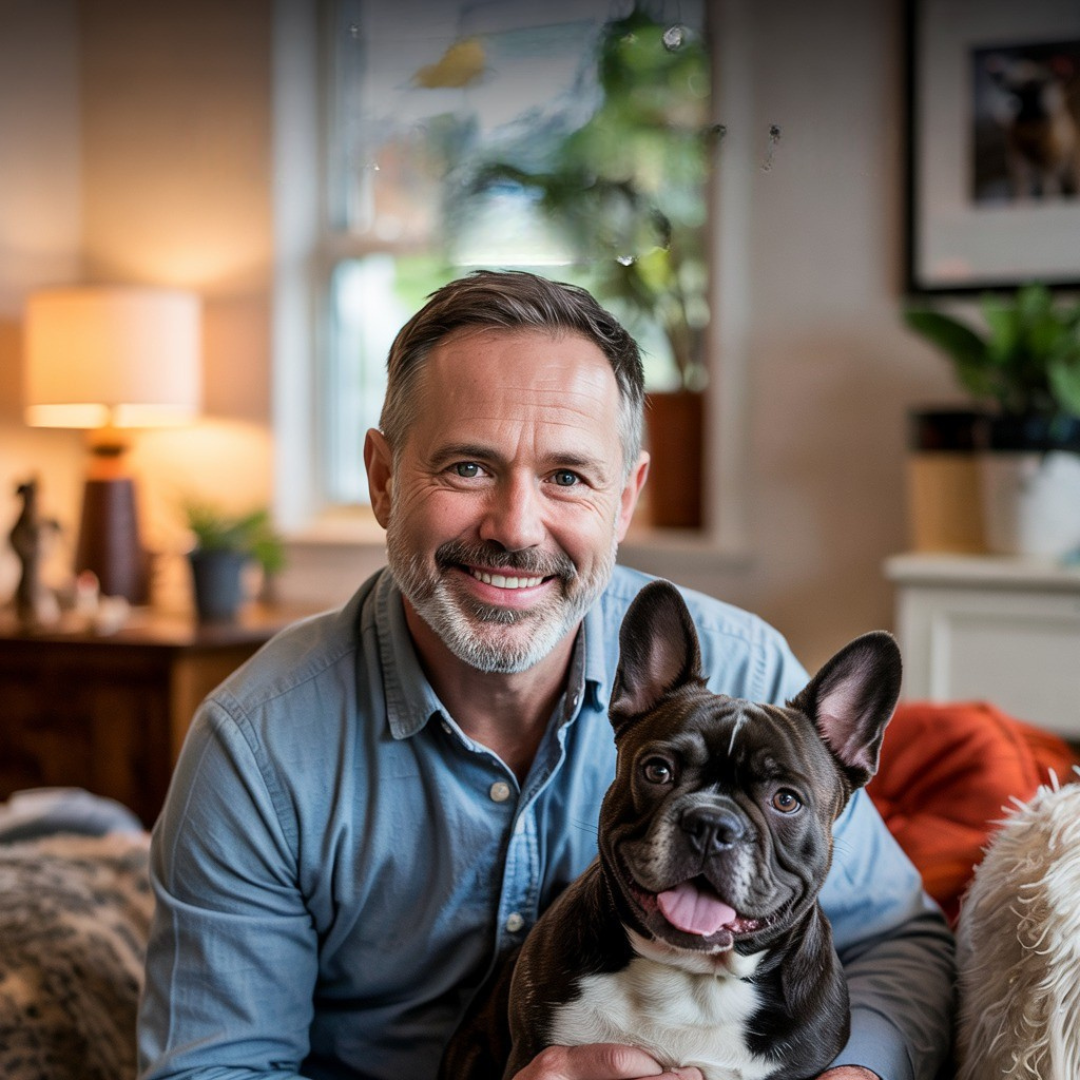
Dr. Alexandre Matheusu is a French Bulldog specialist with over 20 years of hands-on experience dedicated exclusively to the breed. Throughout his career, he has worked closely with responsible breeders, veterinarians, and kennel clubs, always respecting the traditional standards that shaped the French Bulldog into the companion dog it is today.
He holds a degree in Veterinary Medicine and a postgraduate certification in Canine Genetics and Breeding Management. Over the years, Dr. Moreau has focused on preserving breed health, correct morphology, and balanced temperament, following classical breeding principles passed down by experienced breeders.
Recognized for his deep knowledge and practical approach, he has advised kennels across Europe and the Americas, participated as a consultant in breeding programs, and contributed to educational materials aimed at protecting the future of the French Bulldog.
Humanize 274 words